Your portfolio shows the work. Your resume lands the room.
Most designers under-sell themselves on paper. LaunchCV quantifies your hand-off impact, system contributions, research depth, and shipping speed — without making it sound like a banker wrote it.
Design keyword library — pre-loaded
+ 100 more across product, brand, motion, and service design.
Why it matters
The most beautiful designer resume is the one that never parses
Designers are trained to make the artifact gorgeous — so a UX designer resume ends up in two columns, with a custom typeface and links buried in a header graphic. That is exactly the layout an applicant tracking system fails to read.
LaunchCV keeps the impact and drops the parsing risk. Your design portfolio resume stays clean and quantified, so the product designer resume ATS screen passes and a human actually sees the work. Three things stay true:
- Impact is quantified — adoption, time-on-task, and tickets, not just “redesigned”.
- The portfolio stays reachable — live links in a parseable Selected Work section.
- The format parses — single-column layouts built for how major ATS platforms parse.
Design impact, made legible
Pixel-perfect bullets, recruiter-perfect resume
System contributions
Tokens added, components shipped, adoption across squads.
Ship velocity
Concept-to-production timelines, hand-off quality, dev parity.
Research depth
Tests run, participants, decisions changed, features killed.
Craft quality
Accessibility scores, motion principles, design QA pass rate.
Inside the product
Clean, ATS-safe layouts for designers
3 real rewrites
What hiring designers actually want to read
Before
“redesigned the dashboard”
After · AI rewrite
Led 6-week dashboard rework with PM + 3 engineers, lifting daily-active time-on-task by 41% (15.2 → 21.4 min) and cutting support tickets by 28%.
Before
“built design system”
After · AI rewrite
Designed and shipped the v2 token library + 84 Figma components across web, iOS, Android — adopted by 9 product squads, cutting average ship time from 18 → 11 days.
Before
“did user testing”
After · AI rewrite
Ran weekly moderated tests (n = 6, 12 cycles) for the onboarding rebuild — surfaced 14 critical issues pre-ship; activation parity reached week-of-launch.
Portfolio-friendly
Your portfolio is the main act. The resume opens the door.
Every LaunchCV resume includes a dedicated, ATS-parseable Selected Work section. Live links, short context, and the metric that mattered. The recruiter clicks. The portfolio takes over.
Selected work · auto-formatted
Activation Funnel Rebuild
stripe.com — Sr. PD · 2024
+41% time-on-task · −28% tickets
Design System v2 (Tokens + 84 components)
internal · 2023
9 squads adopted · ship time 18 → 11 days
Onboarding Research Cycle
linear.app — Sr. PD · 2023
n = 72 · 14 critical issues pre-ship
How it works
Build a designer resume in five steps
LaunchCV pairs an AI resume builder with JD matching and an ATS check, so your design portfolio resume opens the door your work deserves.
Import or describe your work
Paste an existing resume or describe each project in plain language — voice input works too.
Load a target job description
JD Alignment maps the systems, research, and craft signals the role asks for.
Let AI quantify the impact
Bullets are rewritten with adoption, time-on-task, ship velocity, and research depth.
Check the ATS score
Score your UX designer resume 0–100 with our ATS check; a single-column Selected Work section stays parseable.
Export with portfolio links
Download PDF or DOCX with live, ATS-safe links straight to your best case studies.
Why designers use it
A generic builder vs. a product designer resume ATS engine
Beautiful, portfolio-style resumes are exactly what applicant tracking systems choke on. LaunchCV keeps the impact and drops the parsing risk.
| What hiring designers scan | LaunchCV | Generic resume builder |
|---|---|---|
| Impact metrics | Adoption, time-on-task, and tickets quantified | “Redesigned the dashboard” |
| Systems work | Tokens, components, and squad adoption surfaced | Buried in a paragraph |
| ATS formatting | Single-column, built for how ATS parses | Portfolio layouts that break parsing |
| Portfolio links | A parseable Selected Work section | Links trapped inside a graphic |
| Research depth | Tests, participants, and decisions changed | Left off entirely |
| Proof | Free ATS score — no signup | No feedback loop |
A real use scenario
How Mara made a portfolio-heavy resume actually parse
Mara's resume was a designer's resume: two columns, a custom typeface, and her project links tucked into a beautiful header graphic. It looked great and never got a callback. The applicant tracking system could not read most of it.
She rebuilt it in LaunchCV. The design portfolio resume kept a clean Selected Work section — live links, one line of context, and the metric that mattered. Her vague “redesigned the dashboard” became “Led a 6-week dashboard rework, lifting daily time-on-task by 41% and cutting support tickets by 28%”.
An ATS score check confirmed the new single-column layout parsed cleanly. The portfolio still did the closing; the resume finally opened the door.
Explore the tools
AI Resume Builder
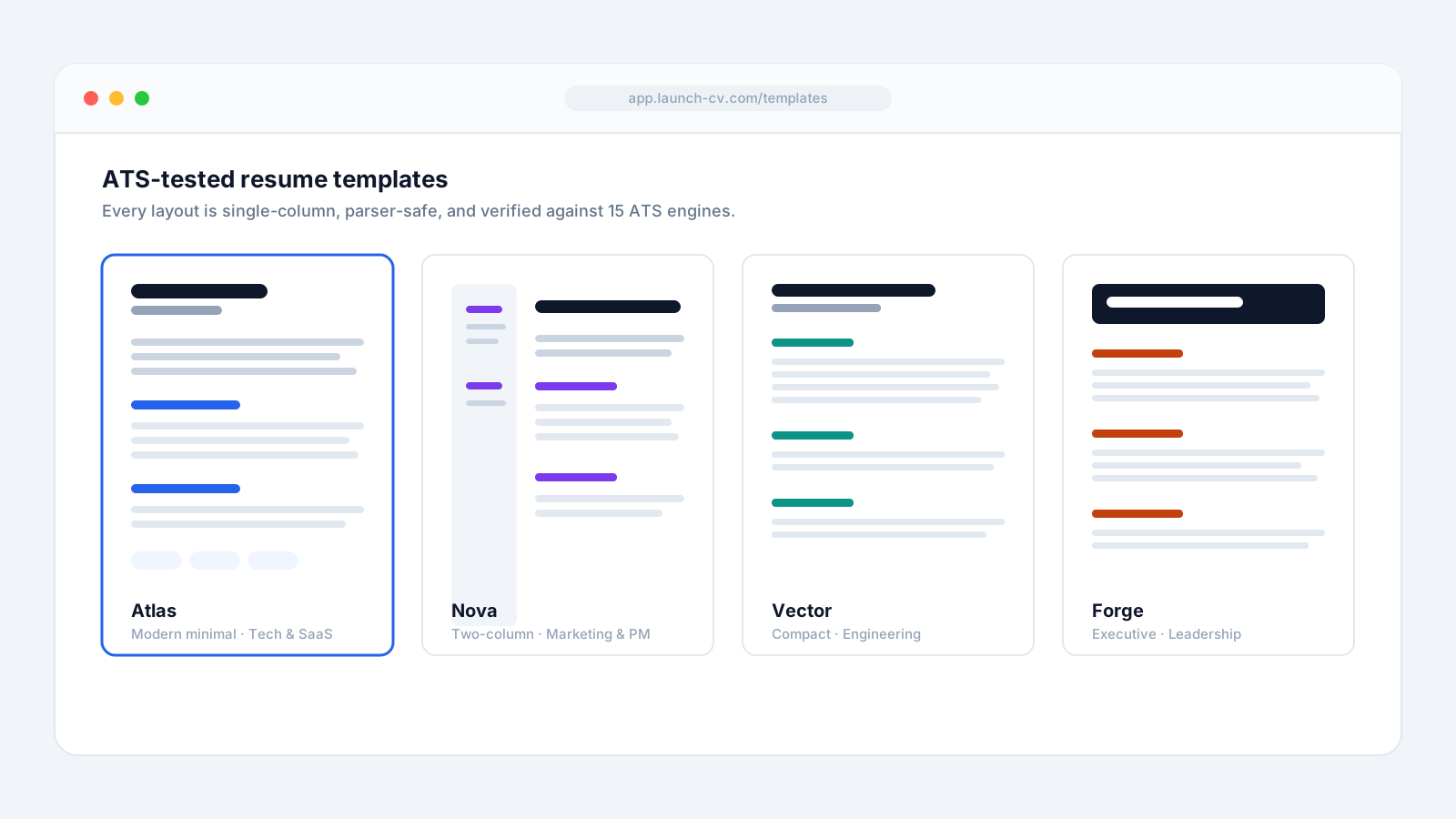
4 ATS-ready templates and quantified bullets.
JD Alignment
Match your resume to any job description.
ATS Score Checker
A 0–100 ATS readiness score.
Cover Letter Generator
A tailored letter in about a minute.
Interview Prep
Role-specific questions with model answer outlines.
Voice Input
Speak your experience, AI writes it.
The taste is yours. Let the resume keep up.
Build my design resumeFAQ
Frequently asked questions
Designers should link the portfolio from a dedicated, ATS-parseable Selected Work section that gives each project a live link, short context, and the metric that mattered. LaunchCV auto-formats this section so a recruiter can click through, while the resume itself stays clean enough to pass ATS parsing.